The Configuration of the Body
I've been reading the recent posts on The Joy of Autism, in which Estée shares her thoughts on dealing with cancer and surgery. She doesn't mourn the loss of her fertility, she writes; rather, she feels blessed to have her son and her stepchildren.
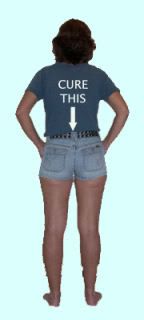
Frankly, I've never seen the point of society's expectation that we should mourn the changes and constraints of our bodies. That idea strikes me as a peculiarly modern form of narcissism, a consequence of an artificial airbrushed culture in which we're all expected to look like glamorous 20-year-old models and athletes while chattering glibly about the latest celebrity gossip and sporting events. If we can't meet this arbitrary ideal (and very few people can), we're then expected to bemoan our tragic physical and mental flaws, like a flock of devout medieval parishioners listing their sins in the confessional. Those of us who pay for enough indulgences, in the form of trendy therapies and diets and counseling groups and whatnot, can hope to buy their way out of social purgatory.
Many years ago, when people still lived in small villages and understood their bodies to be part of the natural world, they had a much more reasonable outlook on aging and on physical and mental differences, accepting them as an ordinary part of life. There's a Pagan ceremony called croning, in which a woman reaching midlife celebrates becoming a crone—that is, a wise elder who is fortunate to have lived long enough to share her knowledge and experience with the younger generation.
Granted, the average lifespan wasn't very long in our ancestors' villages, and I'm not suggesting that we ought to remain in a primitive state of nature and fatalistically accept whatever happens to our bodies. We live in an era of amazing advances in medical science, and I'm very much in favor of taking advantage of these new discoveries to make our lives longer and more pleasant. However, I also believe that we need to think very carefully about just what we're trying to accomplish when we seek to change our bodies and brains. Are we making informed decisions based on our own personal values and preferences, or are we mindlessly following the herd?
We shouldn't simply assume that anything that limits some of our abilities is an undesirable constraint. Abilities, by their very nature, are also constraints, in that they preclude a vast universe of possible alternatives. When a young person who has a talent for music decides to master an instrument, for example, the amount of time required is likely to foreclose the possibility of becoming a varsity athlete. We all have many roads not taken in the rear-view mirror.
Changes and bodily limitations are inevitable as we go through life. When I was a young child, I very much enjoyed climbing trees. I liked having a small body that could easily reach the top branches, perching confidently on the thinnest limbs while counting the blue speckled eggs in a bird's nest. But, like everyone else, I had to grow up. Rather than mourning my loss of the treetops as a tragic misfortune, I was, like most young people, busy discovering other new and interesting activities.
Someday, not too far in the future, advances in bioengineering will allow us to replace our body parts quickly and easily with new components grown or built in a laboratory. There will be new drugs and cybernetic plug-ins that enable us to do whatever we want to do with our brains. We need to consider whether these new technologies will be used to increase self-determination and to broaden the diversity of human experience, or whether social pressure will constrain us to inhabit an ever-narrowing range of acceptable variation such that the diversity of our species vanishes.
Life, in all of its different configurations, gives us new discoveries and experiences that should be embraced, not mourned.
Frankly, I've never seen the point of society's expectation that we should mourn the changes and constraints of our bodies. That idea strikes me as a peculiarly modern form of narcissism, a consequence of an artificial airbrushed culture in which we're all expected to look like glamorous 20-year-old models and athletes while chattering glibly about the latest celebrity gossip and sporting events. If we can't meet this arbitrary ideal (and very few people can), we're then expected to bemoan our tragic physical and mental flaws, like a flock of devout medieval parishioners listing their sins in the confessional. Those of us who pay for enough indulgences, in the form of trendy therapies and diets and counseling groups and whatnot, can hope to buy their way out of social purgatory.
Many years ago, when people still lived in small villages and understood their bodies to be part of the natural world, they had a much more reasonable outlook on aging and on physical and mental differences, accepting them as an ordinary part of life. There's a Pagan ceremony called croning, in which a woman reaching midlife celebrates becoming a crone—that is, a wise elder who is fortunate to have lived long enough to share her knowledge and experience with the younger generation.
Granted, the average lifespan wasn't very long in our ancestors' villages, and I'm not suggesting that we ought to remain in a primitive state of nature and fatalistically accept whatever happens to our bodies. We live in an era of amazing advances in medical science, and I'm very much in favor of taking advantage of these new discoveries to make our lives longer and more pleasant. However, I also believe that we need to think very carefully about just what we're trying to accomplish when we seek to change our bodies and brains. Are we making informed decisions based on our own personal values and preferences, or are we mindlessly following the herd?
We shouldn't simply assume that anything that limits some of our abilities is an undesirable constraint. Abilities, by their very nature, are also constraints, in that they preclude a vast universe of possible alternatives. When a young person who has a talent for music decides to master an instrument, for example, the amount of time required is likely to foreclose the possibility of becoming a varsity athlete. We all have many roads not taken in the rear-view mirror.
Changes and bodily limitations are inevitable as we go through life. When I was a young child, I very much enjoyed climbing trees. I liked having a small body that could easily reach the top branches, perching confidently on the thinnest limbs while counting the blue speckled eggs in a bird's nest. But, like everyone else, I had to grow up. Rather than mourning my loss of the treetops as a tragic misfortune, I was, like most young people, busy discovering other new and interesting activities.
Someday, not too far in the future, advances in bioengineering will allow us to replace our body parts quickly and easily with new components grown or built in a laboratory. There will be new drugs and cybernetic plug-ins that enable us to do whatever we want to do with our brains. We need to consider whether these new technologies will be used to increase self-determination and to broaden the diversity of human experience, or whether social pressure will constrain us to inhabit an ever-narrowing range of acceptable variation such that the diversity of our species vanishes.
Life, in all of its different configurations, gives us new discoveries and experiences that should be embraced, not mourned.
Labels: culture, disability, transhumanism
posted by abfh at
2:20 PM
|
7 comments